Welcome to Japanese Nepali Laboratory
Thank you for using Japanese Nepali laboratory jpnplab.com "Exploring Japanese Language and Culture" is website for learning Japanese language and culture necessary for daily life in Japan. Learn anytime, anywhere, at your pace. Let's get started!
Index
Introduction to Katakana
Katakana and Hiragana originated around the 9th century. At that time in Japan, official documents, literature, and Buddhist sutra were written in Kanji, but Kanji characters were complex and took an enormous time to write. Therefore, to create a simple write Japanese, taking parts of Kanji characters known as Katakana were developed.
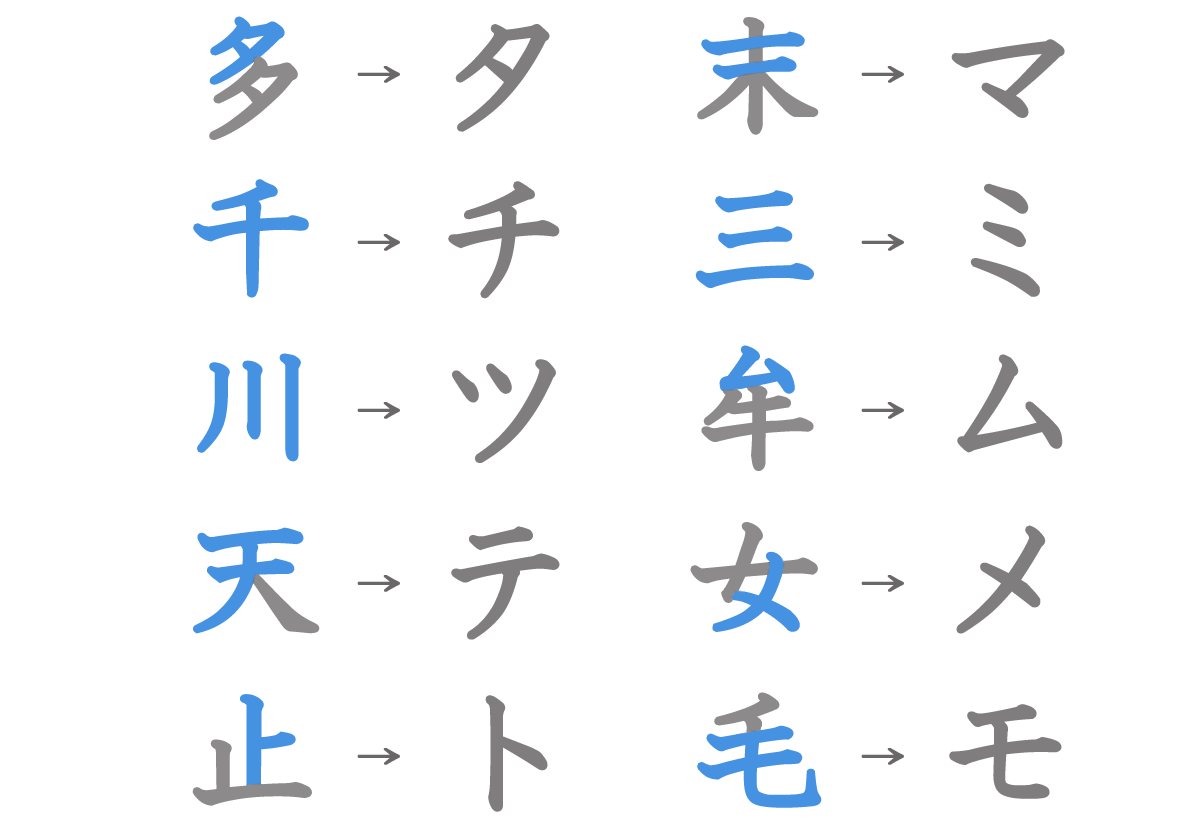
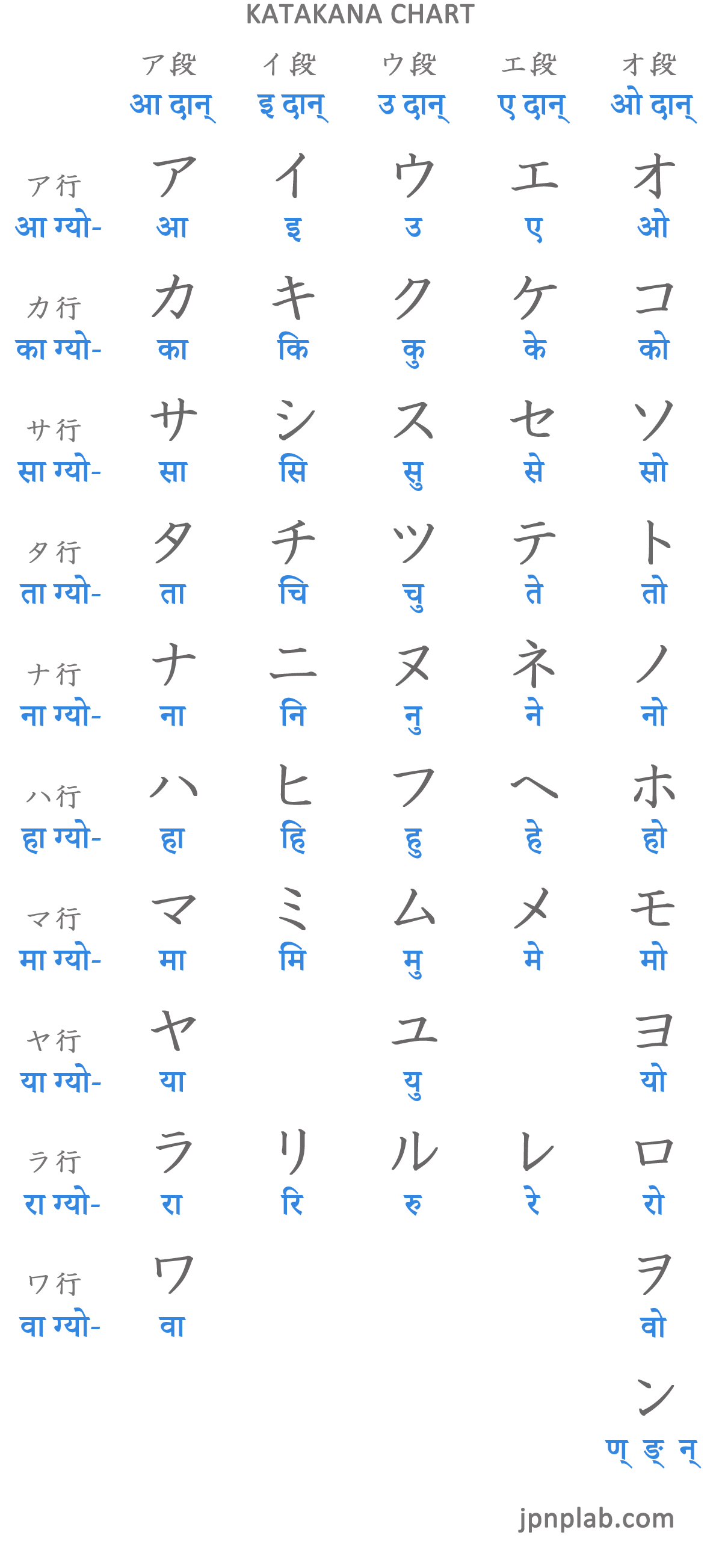
While Kanji represent meaning, Hiragana and Katakana represent sounds. Each character represents one syllable. The Katakana just like Hiragana, starting with आ इ उ ए ओ and ending with वा वो ण् ङ् न् consists of 46 characters.
Katakana
Starting from आ horizontal row (आ / इ / उ / ए / ओ) is called आ ग्यो- similarly, starting from का horizontal row is called का ग्यो- starting from सा row is सा ग्यो- and finally वा row is वा ग्यो-
Then, starting with आ vertical column (आ / का / सा / ता / ना / हा / मा / या / रा / वा) is called आ दान् similarly, starting with इ vertical column is called इ दान् starting with उ vertical column is called उ दान् starting with ए vertical column is called ए दान् and finally starting with ओ vertical column is called ओ दान्
At that time, Katakana was primarily used to supplement readings and meanings of Kanji characters. In this modern age, it is used to write loan words and onomatopoeia words.
Loan words meaning words from foreign countries, and there is a rule that English words, foreign place names, country names, and personal names are written in Katakana. In Nepali language also, loan words are sometimes written in Devanagari script (eg. generation z=जेनजी) it would be good if you could imagine like that.
The Katakana spelling of loan words is based on Japanese pronunciation of English words, so when you first start learning Japanese, you might struggle to write Katakana smoothly. For example, the word "table" featured in "Minna no Nihongo" Lesson 10 particularly symbolizes the complexity of these Katakana English words. Native pronunciation is /teɪbəl/ but in japanese "tēburu" is common term. This is because /eɪ/ sound is feel as a long vowel in Japanese. Katakana English pronunciation is somewhat unique, and it takes a lot of practice to get used to it. However, there are several rules for Katakana, so next explain some key points to aid your understanding. The first is an about Long Vowels in Katakana.
Next, Introduction to Onomatopoeia