Welcome to Japanese Nepali Laboratory
Thank you for using Japanese Nepali laboratory jpnplab.com "Exploring Japanese Language and Culture" is website for learning Japanese language and culture necessary for daily life in Japan. Learn anytime, anywhere, at your pace. Let's get started!
Index
Introduction to Hiragana
Hiragana and Katakana originated around the 9th century. At that time in Japan, official documents, literature, and Buddhist sutra were written in Kanji, but Kanji characters were complex and took an enormous time to write. Therefore, to create a simple write Japanese, the simplified characters known as Hiragana were developed.
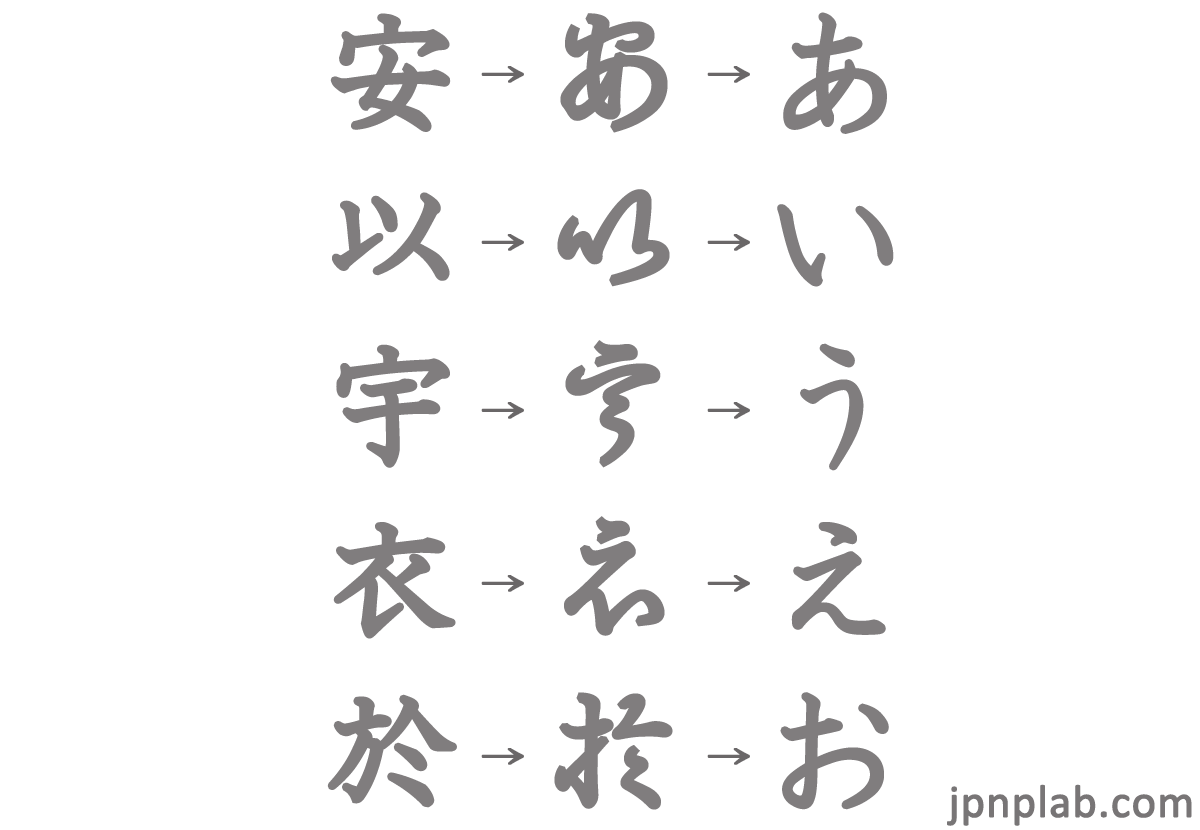
Kana Font Source:www.wakufactory.jp
While Kanji represent meaning, Hiragana and Katakana represent sounds. Each character represents one syllable. The Hiragana, starting with आ इ उ ए ओ and ending with वा वो ण् ङ् न् consists of 46 characters.
Hiragana
Starting from आ horizontal row (आ / इ / उ / ए / ओ) is called आ ग्यो- similarly, starting from का horizontal row is called का ग्यो- starting from सा row is सा ग्यो- and finally वा row is वा ग्यो-
Then, starting with आ vertical column (आ / का / सा / ता / ना / हा / मा / या / रा / वा) is called आ दान् similarly, starting with इ vertical column is called इ दान् starting with उ vertical column is called उ दान् starting with ए vertical column is called ए दान् and finally starting with ओ vertical column is called ओ दान्
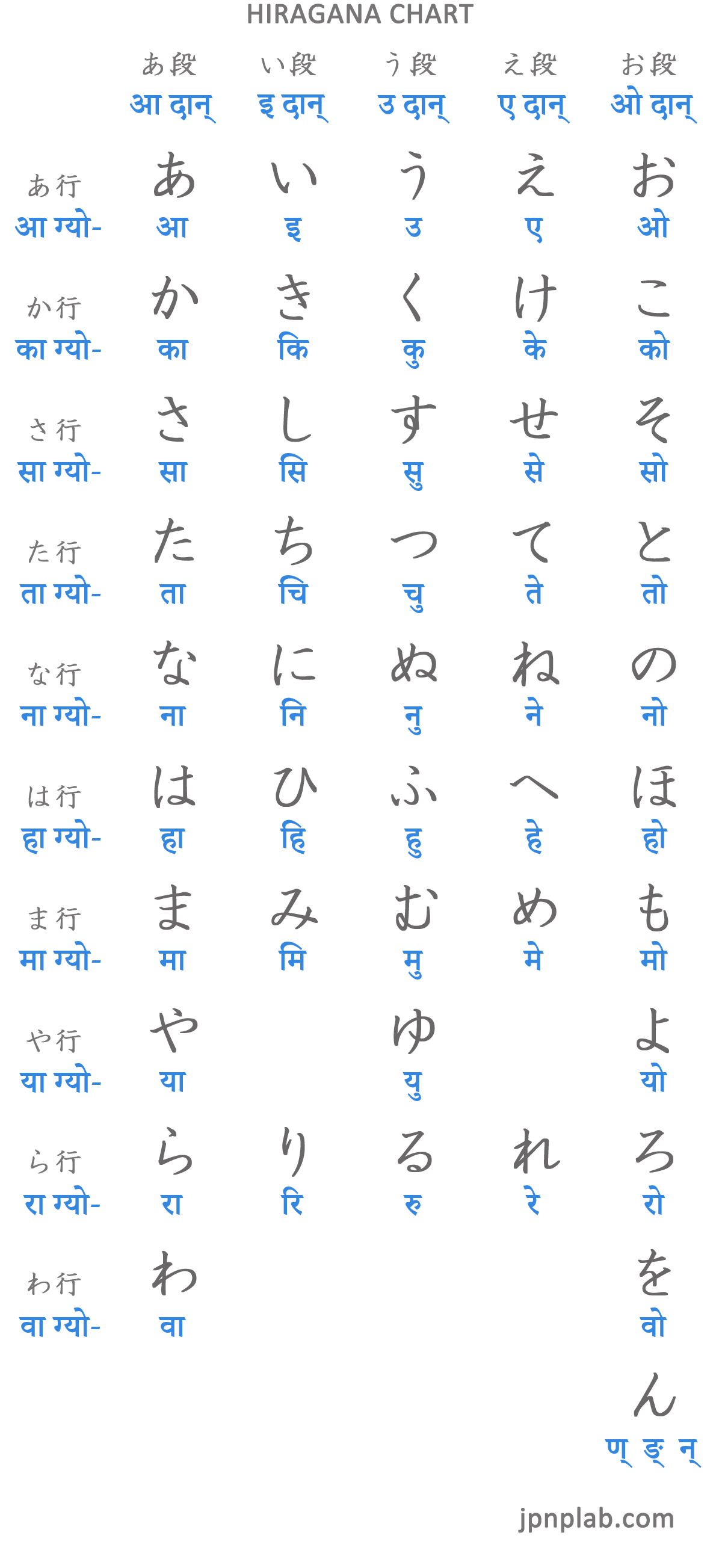
This row and vertical composition is thought that originate from Sanskrit. In the past, Buddhist monks needed to read sutra in Sanskrit and historical books for their Buddhist studies. That Sanskrit had vowels and consonants are row and vertical arranged, so that applied same arrangement to Japanese as well. Everything happens for a reason.
Dakuon Handakuon
In addition to this 46 basic hiragana characters, there are 25 characters that include दाकुओन् (also known as तेन्तेन्) and हान्दाकुओन् (also known as मारू)
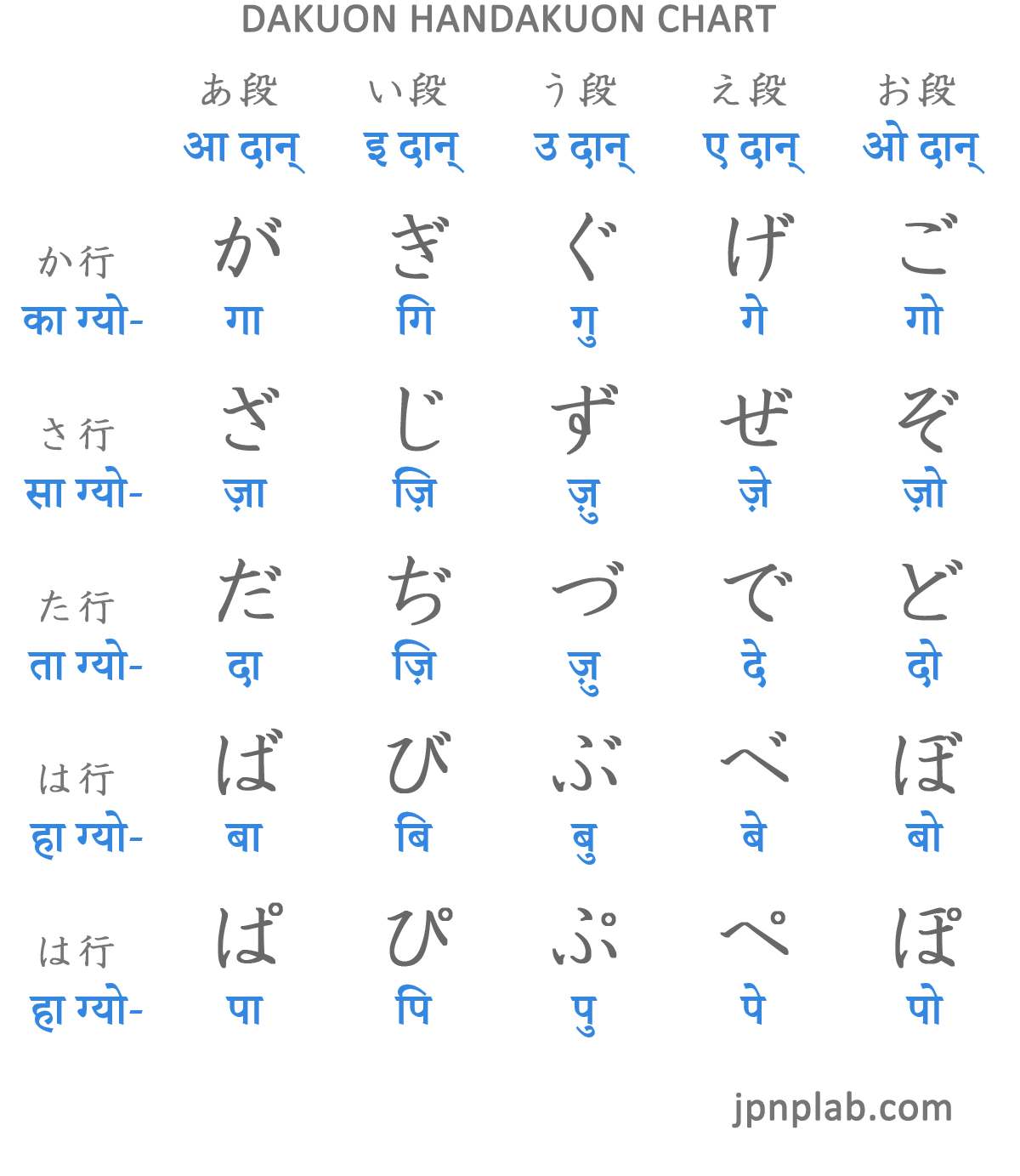
दाकुओन् means voiced sound. It is used only with का ग्यो- सा ग्यो- ता ग्यो- and हा ग्यो- consonants. हान्दाकुओन् has characteristic of being pronounced after briefly closing the mouth and this also known as P-sound. दाकुओन् vibrates vocal cords, whereas हान्दाकुओन् does not vibrates.
Yo-on
Furthermore, there are 33 characters known as यो-ओन् which are adding small characters या यु यो to the end of a syllable (also know as combination) thus, two characters represent one syllable.
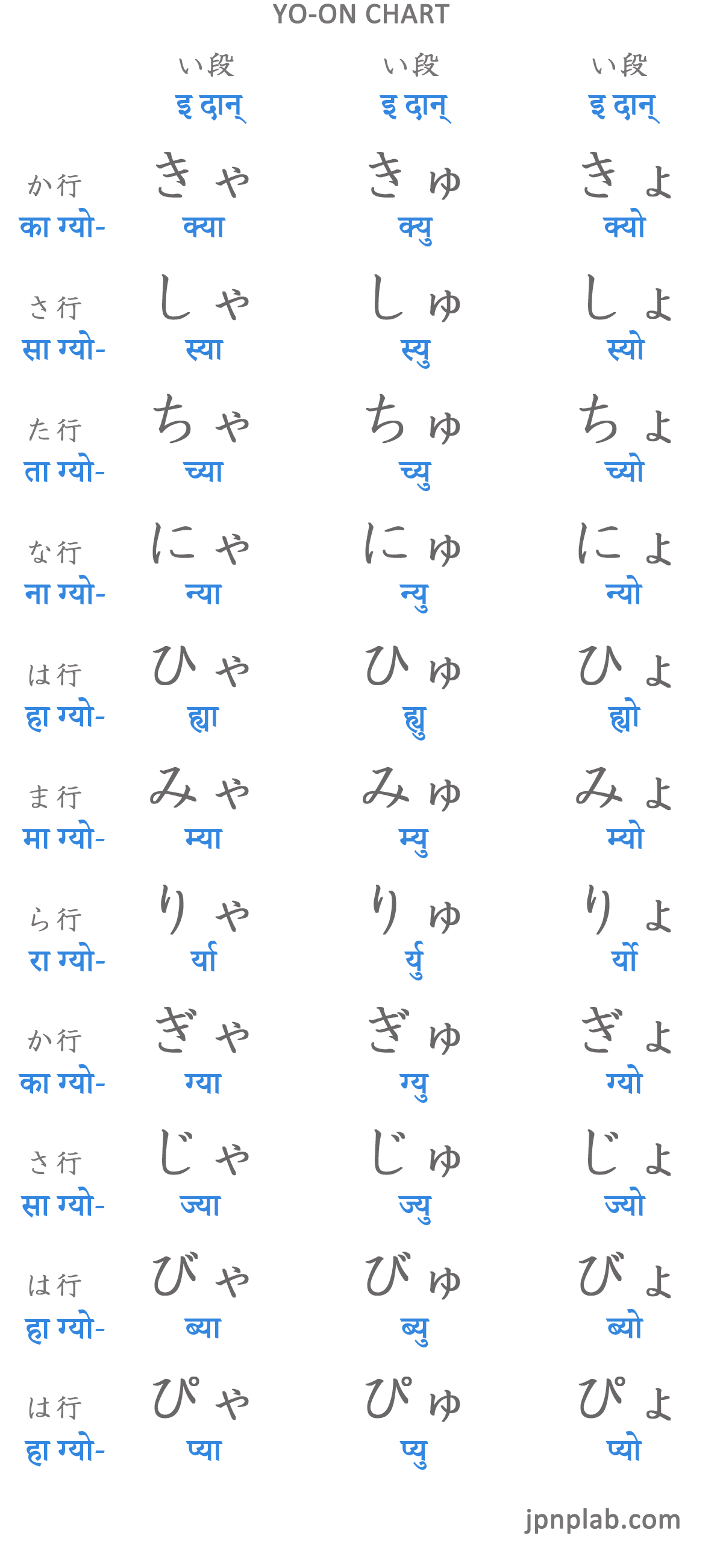
यो-ओन् means contracted sound. It is used only with इ दान् (कि / सि / चि / नि / हि / मि / रि), इ दान् दाकुओन् (गि / जि / बि), इ दान् हान्दाकुओन् (पि)
Next, Introduction to Katakana