Welcome to Japanese Nepali Laboratory
Thank you for using Japanese Nepali laboratory jpnplab.com "Exploring Japanese Language and Culture" is website for learning Japanese language and culture necessary for daily life in Japan. Learn anytime, anywhere, at your pace. Let's get started!
Index
Introduction to Japanese Language
Introduction to Kanji
Introduction to Hiragana
Introduction to Katakana
Introduction to Onomatopoeia
Introduction to Pronunciation
Introduction to Grammar
Onomatopoeia derives from the ancient Greek word "ὀνοματοποιία" it describe to words that express the sounds, states, emotions, or atmospheres produced by people, animals, or objects. Onomatopoeia primarily has two types: "onomatopoeic words" that express sounds actually heard, such as sounds objects for example, animal crying or nature sounds and "mimetic words" that express perceived sounds not actually heard, such as human emotions or state of objects.
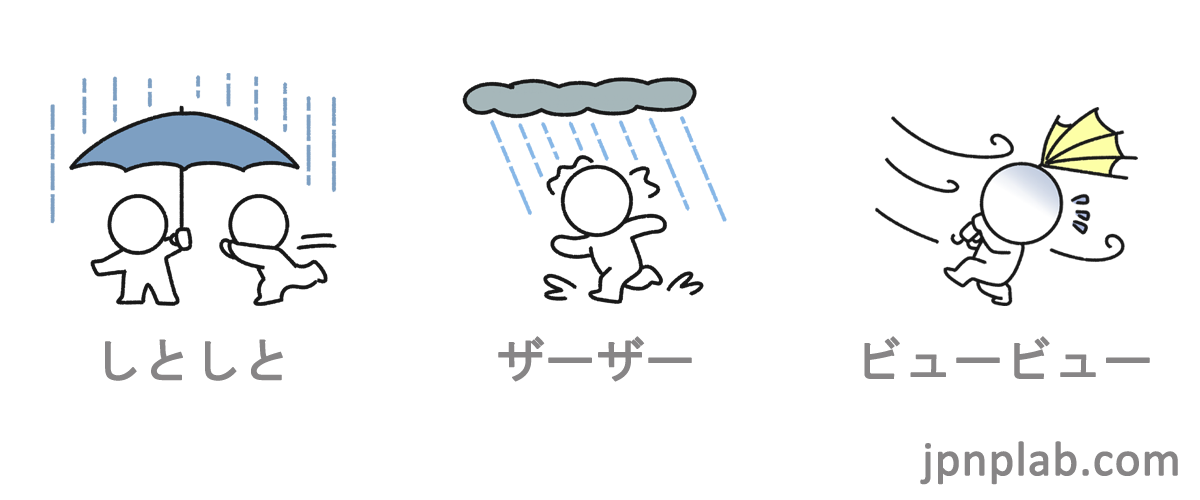
Onomatopoeia is written in Hiragana or Katakana, sometime also with written in Kanji. It is commonly use in conversation and also use in manga and anime. For example, what kind of rain was it? "a drizzling rain" or "pouring rain" etc. expand expressive range through onomatopoeic adjective, you will be able to communicate more effectively. Here are some typical onomatopoeia examples.
Onomatopoeic Word
Sounds of nature:
सितोसितो (drizzling)
ज़ा-ज़ा- (heavy rain)
ब्यू-ब्यू- (strong wind)
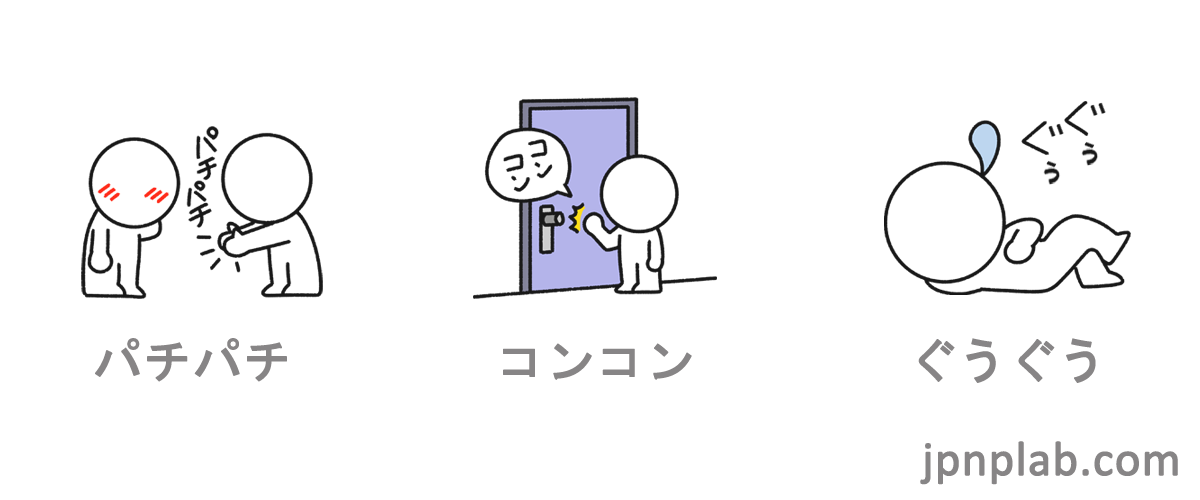
Sound of activity:
पाचिपाचि (clapping)
कोन् कोन् (knocking)
गू-गू- (snoring)
Sounds of things:
चिन् (heating end)
दोकान् (crash)
गातागाता (shaky)
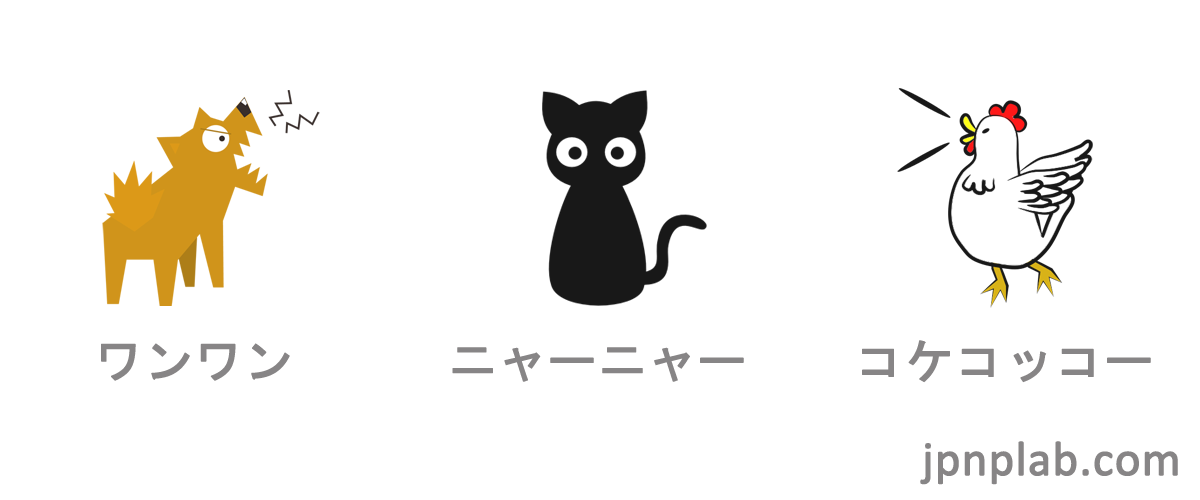
Animal crying:
वान् वान् (woofwoof)
न्या-न्या- (meowmeow)
कोकेकोक्को- (rooster)
Mimetic Word
Condition:
किराकिरा (twinkle)
चुरुचुरु (slippery)
युरायुरा (slow swaying)
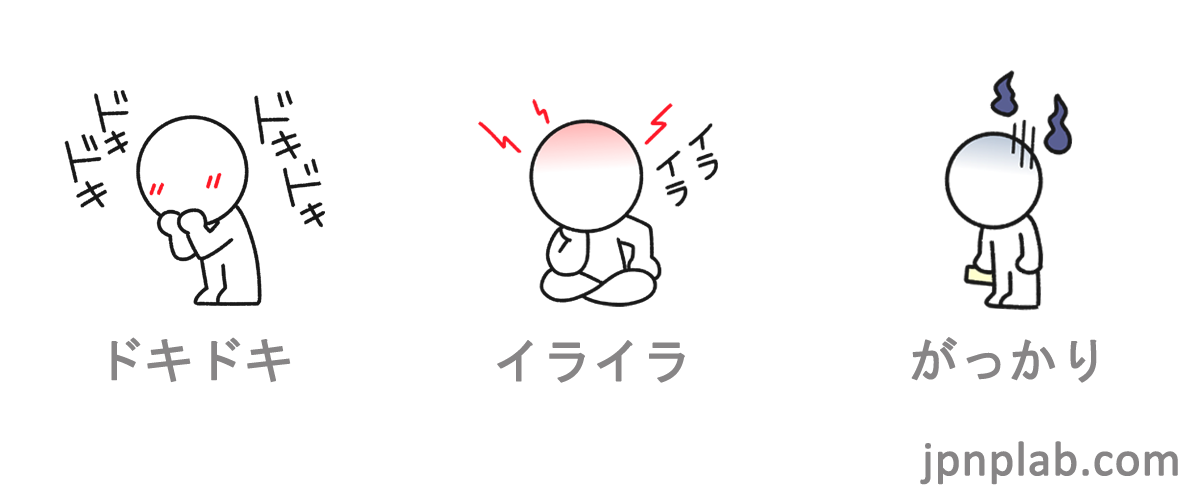
Emotion:
दोकिदोकि (pounding)
इराइरा (annoy)
गाक्कारी (disappointed)
Atmosphere:
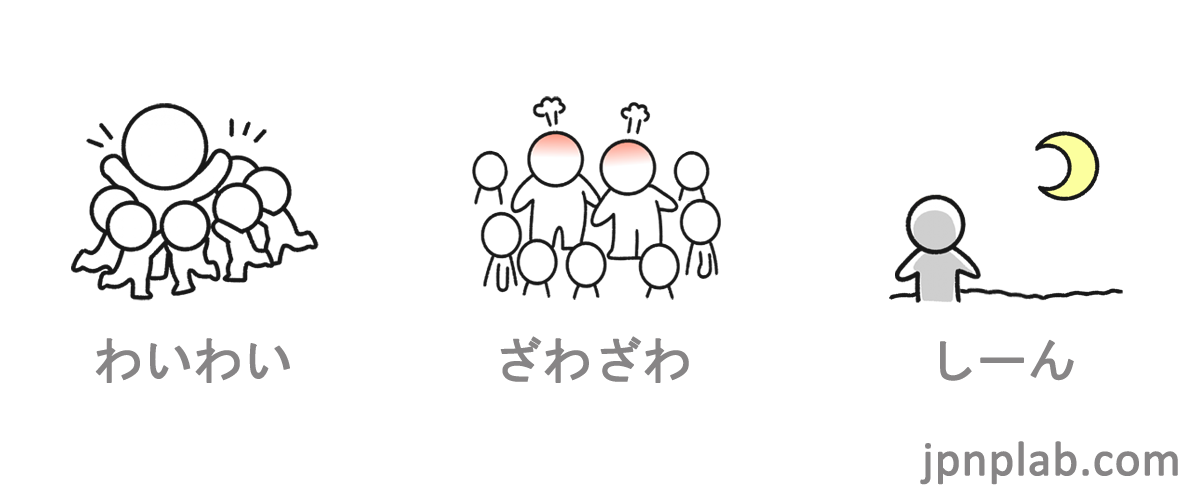
वाइवाइ (cheerfully)
ज़ावाज़ावा (noisy)
सी-न् (silently)
Pain:
बिरिबिरि (electric shock)
हिरिहिरि (tingling)
ज़ुकिज़ुकि (headache)
Onomatopoeic Word
Sounds of nature:
सितोसितो (drizzling)
ज़ा-ज़ा- (heavy rain)
ब्यू-ब्यू- (strong wind)
Sound of activity:
पाचिपाचि (clapping)
कोन् कोन् (knocking)
गू-गू- (snoring)
Sounds of things:
चिन् (heating end)
दोकान् (crash)
गातागाता (shaky)
Animal crying:
वान् वान् (woofwoof)
न्या-न्या- (meowmeow)
कोकेकोक्को- (rooster)
Mimetic Word
Condition:
किराकिरा (twinkle)
चुरुचुरु (slippery)
युरायुरा (slow swaying)
Emotion:
दोकिदोकि (pounding)
इराइरा (annoy)
गाक्कारी (disappointed)
Atmosphere:
वाइवाइ (cheerfully)
ज़ावाज़ावा (noisy)
सी-न् (silently)
Pain:
बिरिबिरि (electric shock)
हिरिहिरि (tingling)
ज़ुकिज़ुकि (headache)
Onomatopoeic Word
Sounds of nature:
सितोसितो (drizzling)
ज़ा-ज़ा- (heavy rain)
ब्यू-ब्यू- (strong wind)
Sound of activity:
पाचिपाचि (clapping)
कोन् कोन् (knocking)
गू-गू- (snoring)
Sounds of things:
चिन् (heating end)
दोकान् (crash)
गातागाता (shaky)
Animal crying:
वान् वान् (woofwoof)
न्या-न्या- (meowmeow)
कोकेकोक्को- (rooster)
Mimetic Word
Condition:
किराकिरा (twinkle)
चुरुचुरु (slippery)
युरायुरा (slow swaying)
Emotion:
दोकिदोकि (pounding)
इराइरा (annoy)
गाक्कारी (disappointed)
Atmosphere:
वाइवाइ (cheerfully)
ज़ावाज़ावा (noisy)
सी-न् (silently)
Pain:
बिरिबिरि (electric shock)
हिरिहिरि (tingling)
ज़ुकिज़ुकि (headache)
Japanese and Nepali onomatopoeia are remarkably similar. Onomatopoeia and mimetic words are expressions based on subjective or feelings, lot of flexibility to make creative expression. Give it a try incorporating it into your daily life.
Next, Introduction to Pronunciation
TOP > C/ROOM > ONOMATOPOEIA